
Beyond the Dirt Track: The Hidden Engineering of Wentworth’s Baja Racing Team
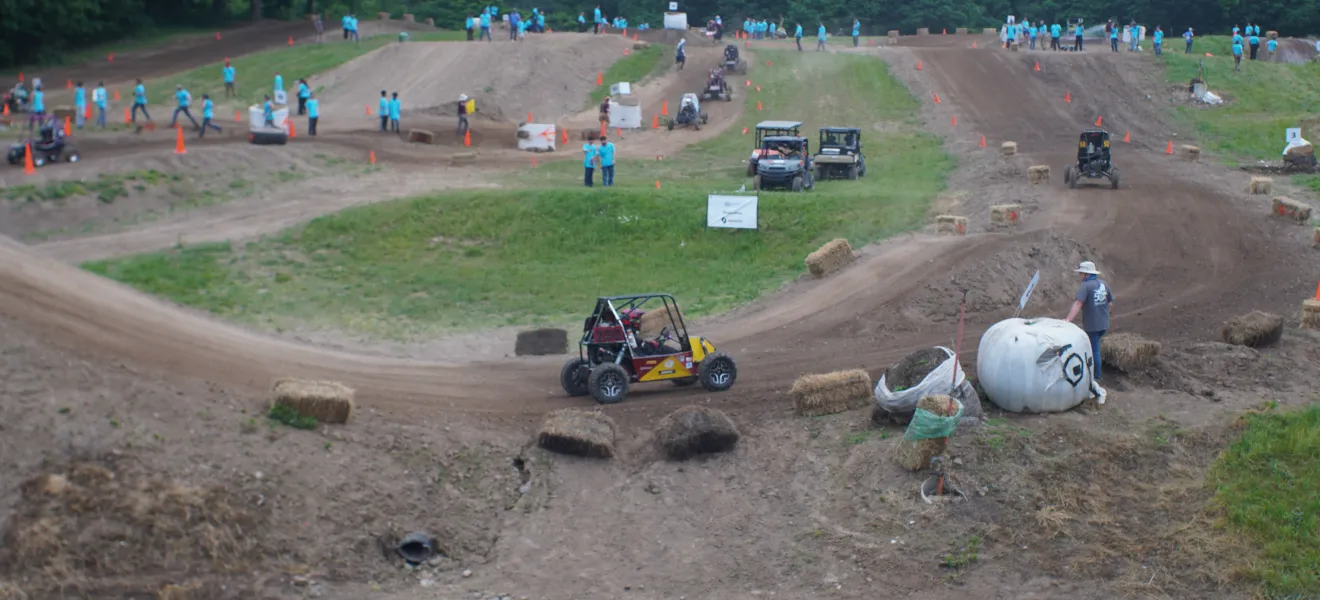
Baja SAE (Society of Automotive Engineers) challenges undergraduate engineering teams to design, manufacture, and race a single-seat off-road vehicle from scratch before taking the vehicle into competition
The biggest test for Wentworth Institute of Technology's Leopard Racing team is not always on the dirt track, but rather in the inspection bay. Before Car #200 ever kicks up dust, a panel of SAE judges scrutinizes every inch of the student-built vehicle to ensure it’s race-ready.
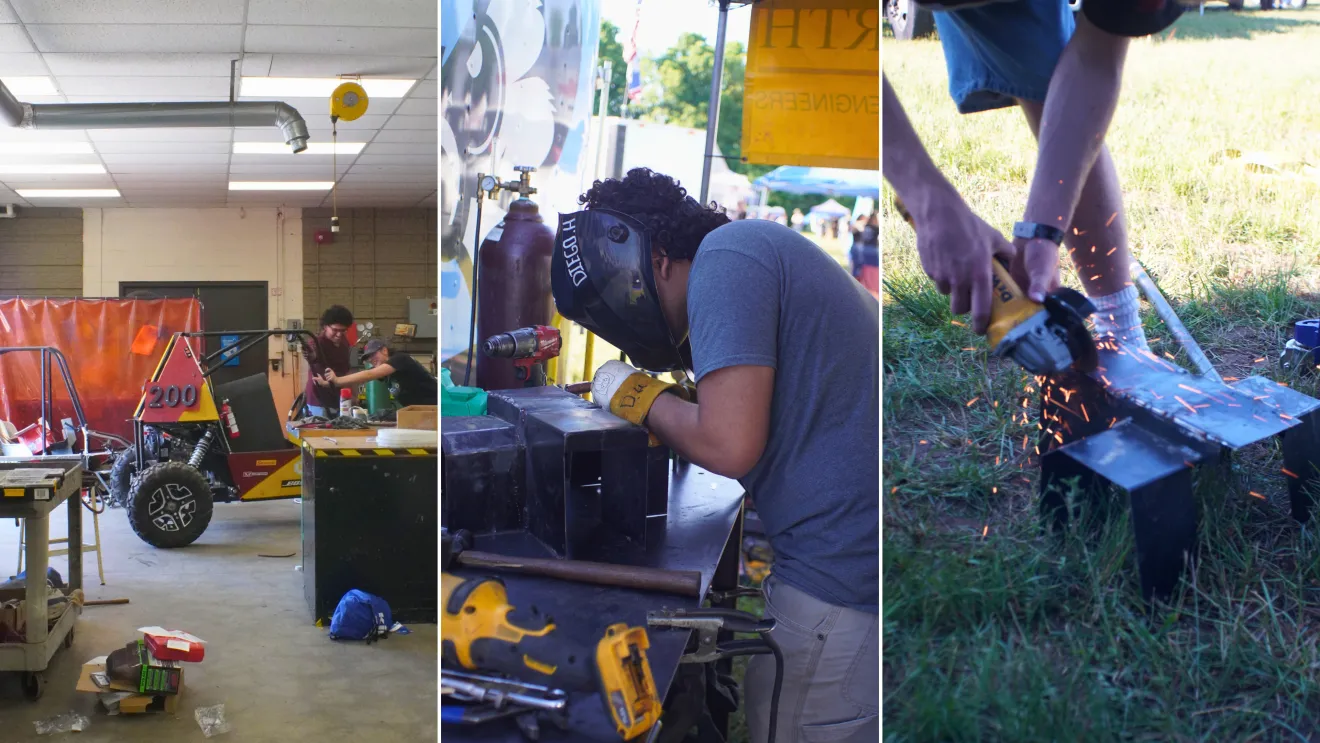
Baja SAE (Society of Automotive Engineers) challenges undergraduate engineering teams to design, manufacture, and race a single-seat off-road vehicle from scratch. Wentworth students typically forgo off-the-shelf components, choosing instead to fabricate parts themselves on campus in Kingman 103.
“Classrooms teach you the theory, but Baja teaches you how to build for the real world, said student Nicholas Aguiar. “We take raw steel and turn it into a competitive, dirt-shredding off-road vehicle from scratch.”
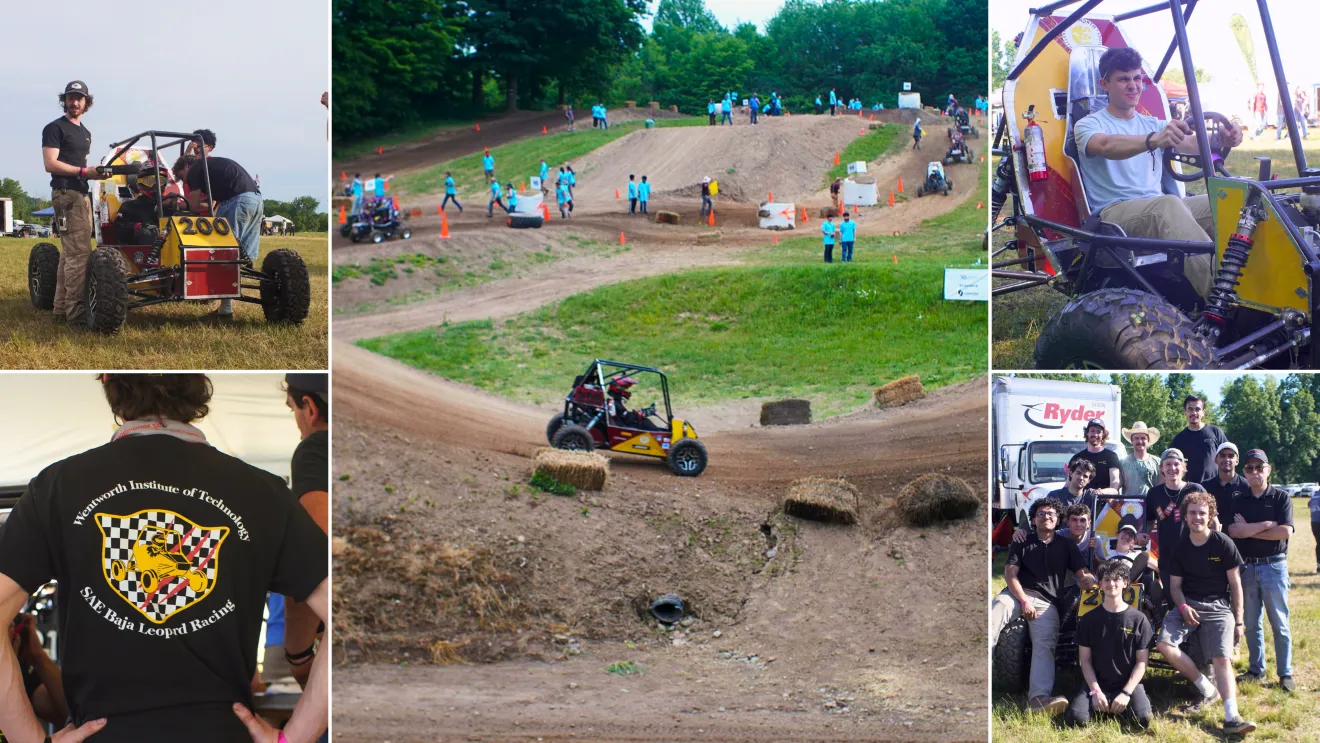
Twelve students and Laboratory Director Herb Connors recently put that mindset to the test in Palmyra, New York, for their first competition of the season. Taking on more than 120 teams from top universities across the United States, Europe, Asia, and South America, Leopard Racing spent three days clearing every rigorous engine, brake, technical, and cost analysis evaluation. On the track, they set a new milestone for the Wentworth program, completing laps without retiring and finishing 75th overall. The team will travel to Nashport, Ohio, for their next international competition this September.
Some of the vehicle's most impressive engineering happens under the hood. Rather than settling for a stock gearbox, the team engineered a custom three-gear drop box calibrated to their exact reduction needs. This design underwent extensive finite element analysis (FEA) and thermal dissipation modeling long before any aluminum was milled.
Featuring a Kohler engine, a Comet 40 CVT, and Arctic Cat locking differentials, the drivetrain is the result of strict failure analysis. By examining exactly what broke on previous iterations, the team used data from past runs to inform their latest shaft and force calculations.
The electrical team took a similar DIY approach, building a dual-ESP32 data acquisition system entirely in-house. The system logs 17 real-time data channels (including speed, GPS, fuel flow, and brake pressure), feeds live data to a cockpit touchscreen, and streams a vital-signs dashboard over WiFi directly to the pit crew.
“It’s a relentless test of engineering, teamwork, and grit,” said Aguiar, “and we love every second of it.”
Engineering the Paper Trail
Every subsystem on Car #200 starts as a full 3D CAD assembly, supported by complete SolidWorks models and validated by simulations before manufacturing begins.
In order to pass the strict SAE technical inspections and design reviews, Wentworth students maintain exhaustive engineering drawings, load calculations, and design justification documents. This meticulous record-keeping is also how institutional knowledge survives. As student leadership transitions each year, these files ensure the reasoning behind past engineering decisions is not lost.
"Baja has given me incredible practical opportunities needed to build things and apply that theory to something real,” said student Robert J. Stewart.
The Team Behind the Wheel
Leopard Racing is split into five specialized subsystem teams: Braking and Steering, Drivetrain, Suspension, Frame and Chassis Body, and Electrical.
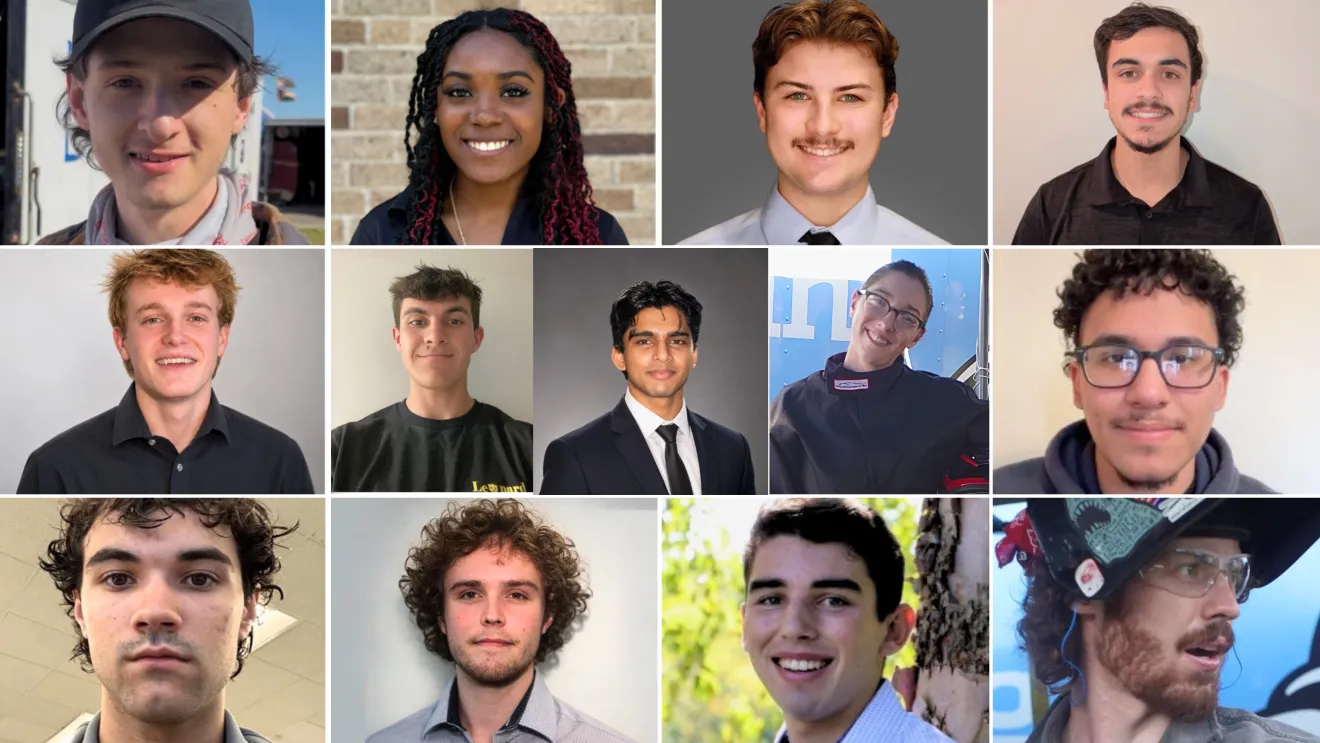
2026–27 Board
- Presidents: Nick Aguiar, Tyler Hanlon
- VP / Operations Managers: Fuad Ahmar, Jaden Thielke
- Treasurer: Ian Bain
- Events Coordinator: Lillian Learned
- Training Coordinators: David Levanto, Diego Hernandez Mendez
- Electrical & DAQ Lead: Shubaan Meyyappan
Robert Stewart served as President from 2024 to 2026. Meyyappan served as Electrical & DAQ Lead from 2024 to 2026.
Leopard Racing also focuses heavily on mentoring younger students. Through an internal onboarding program, Training Coordinators work directly with incoming members to develop foundational skills in CAD, fabrication, and systems thinking. This ensures that when senior members graduate, their technical standards and team culture remain intact.
"Baja to me doesn't feel just like a club, instead it feels like a family that also happens to be building a Baja car,” said student Tyler Hanlon.
How to Support the Team
Leopard Racing relies on industry and alumni support to keep their momentum going. The team is currently seeking in-kind donations (tools, parts, equipment), logistical support for multi-day events, and discounted supplier relationships for materials and fabrication.
For sponsors, the program offers a direct link to students who have already executed a full vehicle design-and-build term and managed competition-day troubleshooting under pressure.
“Baja has become much more than just a club to me,” said Stewart. “I realized it is not just about building a car, but about building a team, and I couldn't be happier with the team we are building.”
Leopard Racing is actively looking to grow, and students from all engineering disciplines are encouraged to get involved with no prior experience required. Interested students can visit Kingman 103 on Tuesdays and Thursdays from 3:00 to 5:00 p.m., or check the LeopardWeb page.
For sponsorship inquiries, email sae@wit.edu or follow Baja SAE Leopard Racing on LinkedIn.