Engineering & Sciences Majors
Take it Apart. Put it Back Together. Make it Better.
Some people want to know how the machine works...and then they want to build a better one. Engineering and the Sciences at Wentworth are where you go deep: into robots, into circuits, into the math and physics behind everything that moves, lifts, computes, or flies. You’ll work in real labs, with faculty who often come from industry, on problems that don’t have answers in the back of the book.
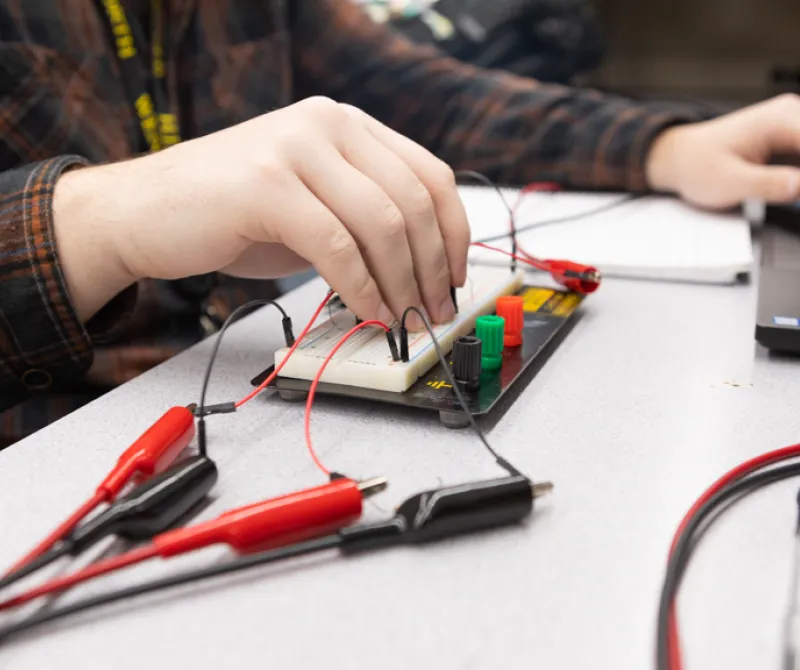
Wentworth's engineering and sciences programs are project-based from your first semester. You'll design and build in our labs, run your own experiments, and put that experience to work in two full co-ops.
Engineering & Sciences Majors
- Applied Mathematics
- Applied Sciences
- Computer Engineering
- Electrical Engineering
- Electromechanical Engineering
- Engineering
- Mechanical Engineering
- Physics
- Robotics Engineering
Build a Robot from Scratch
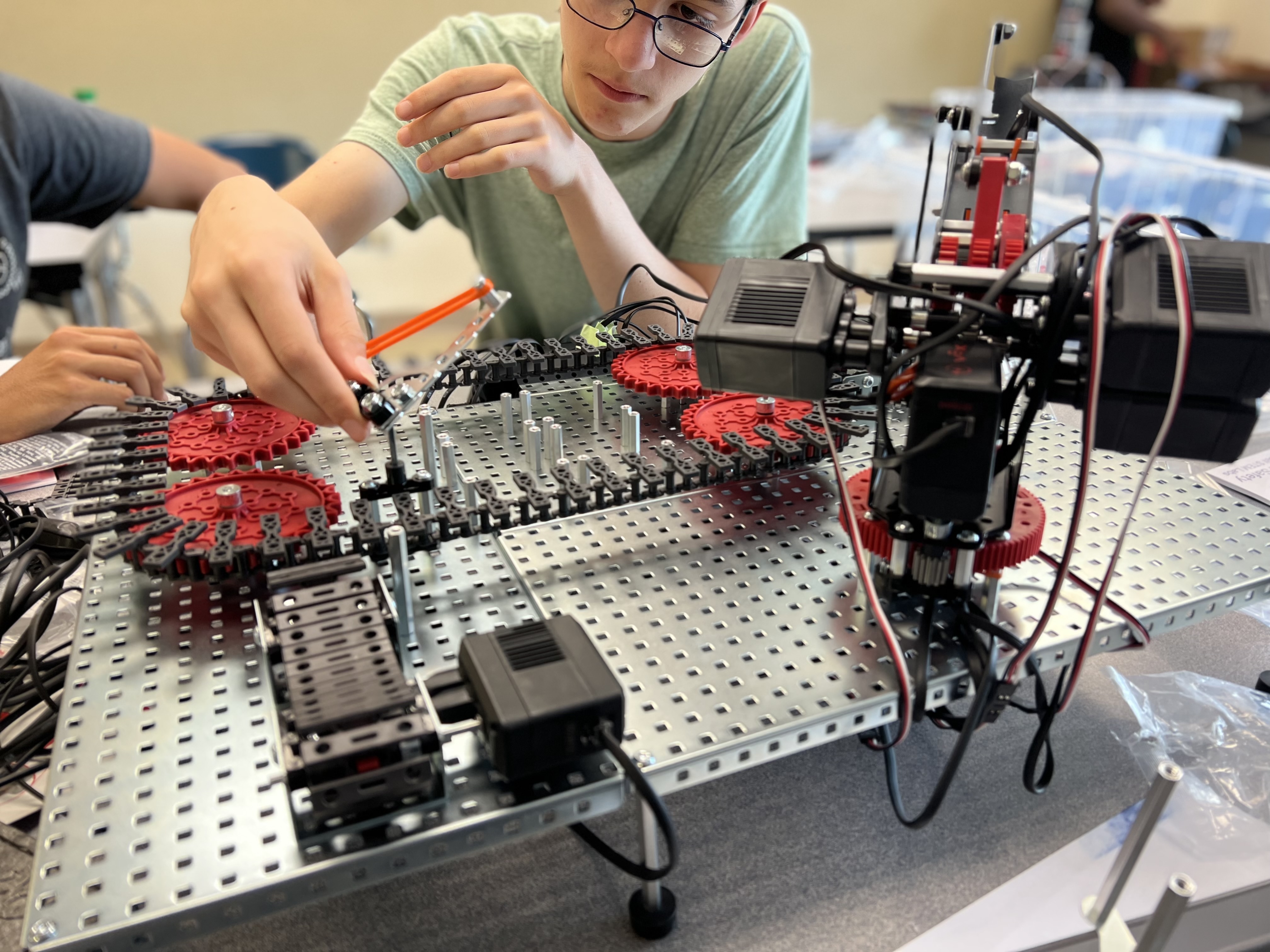
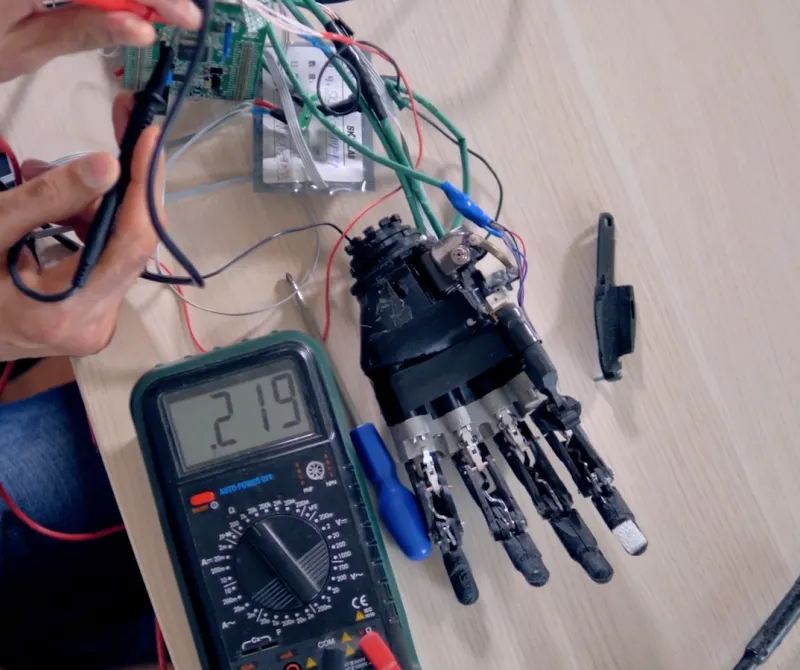
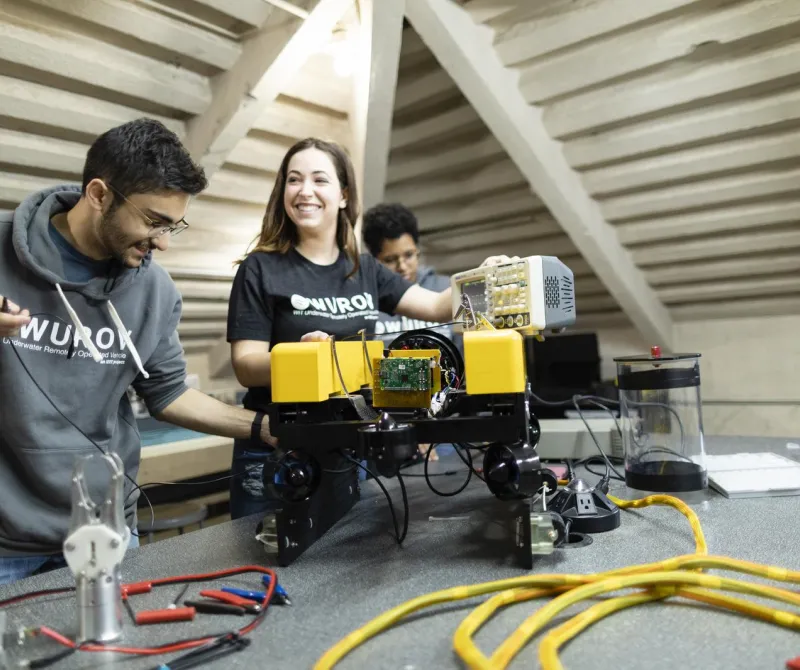
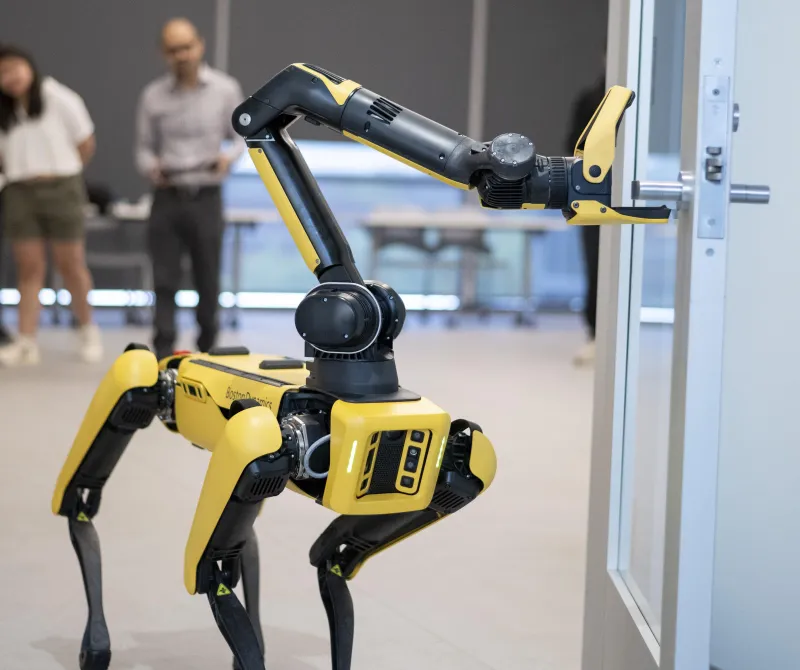
Building a robot is a multi-disciplinary challenge that requires a deep understanding of how physical and digital systems interact. In the Robotics Engineering program, you will start with a blank slate and move through every stage of development—from designing the physical structure to wiring the intricate electronic circuits. You will then bring your creation to life by writing the custom code that allows it to perceive and interact with its environment, putting it through its paces in our specialized robotics labs.
This work is supported by a strong foundation in Engineering principles and Electromechanical Engineering, which provide the expertise needed to integrate moving parts with electrical power. By mastering these diverse skill sets, you learn to create machines that are more than just a collection of parts, they are intelligent systems capable of solving complex tasks. This hands-on approach ensures you graduate with the technical confidence to build the automated technologies of the future.
Engineer the Systems Inside Cars, Drones, and Satellites
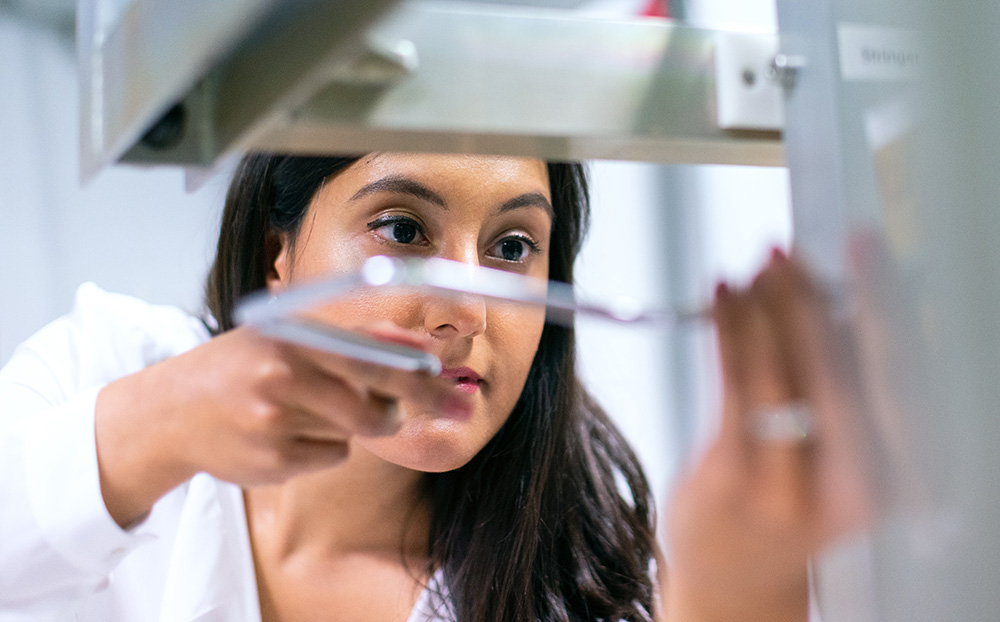
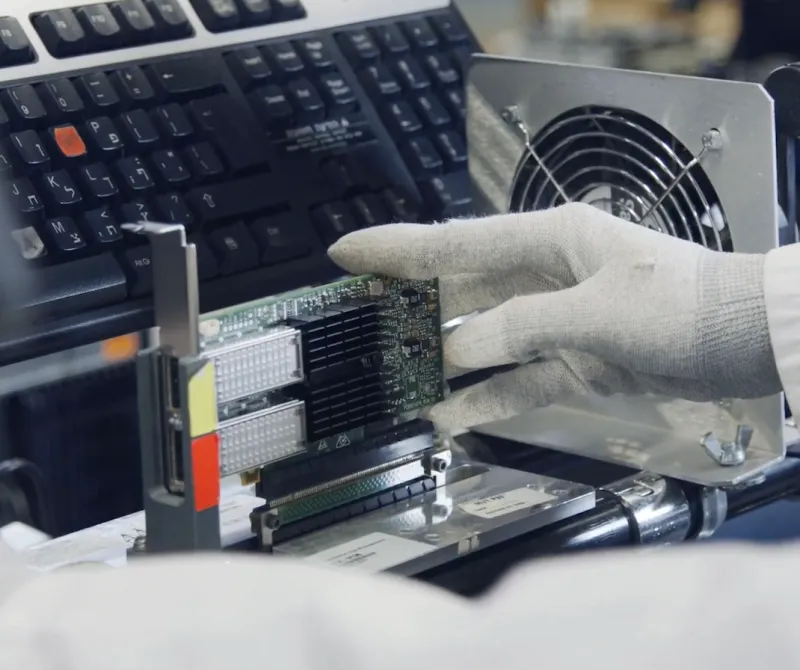
Modern technology relies on a complex web of engineering disciplines working in perfect harmony. Through the Computer Engineering, Electrical Engineering, and Mechanical Engineering programs, you will go deep into the systems that power the world's most advanced machines. You will learn how each individual component—from a single microchip to a massive structural frame—works on its own and how they must be precisely fit together to create reliable, high-performance devices like drones and satellites.
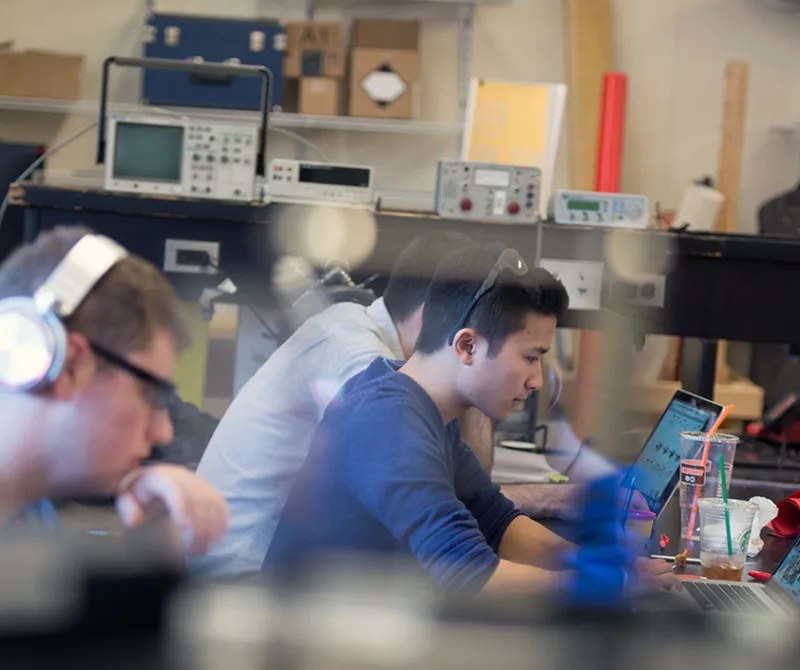
Working in real labs alongside faculty with industry experience, you will tackle problems that don’t have answers in the back of a textbook. This path prepares you to understand the full lifecycle of a device, from the initial electrical signal to the final mechanical movement. By studying the very disciplines that touch nearly every piece of technology we own, you position yourself at the heart of global innovation.
Predict How Things Will Work Before You Build Them

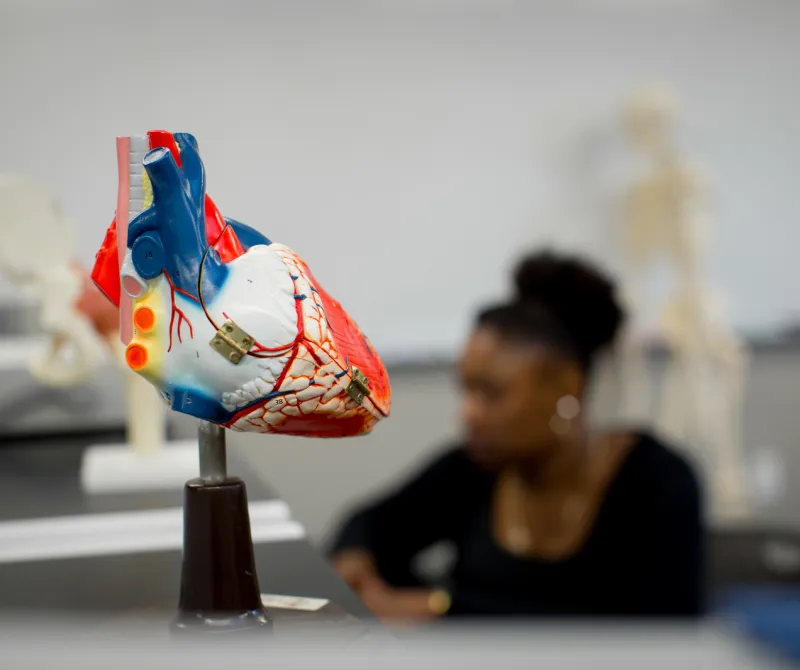
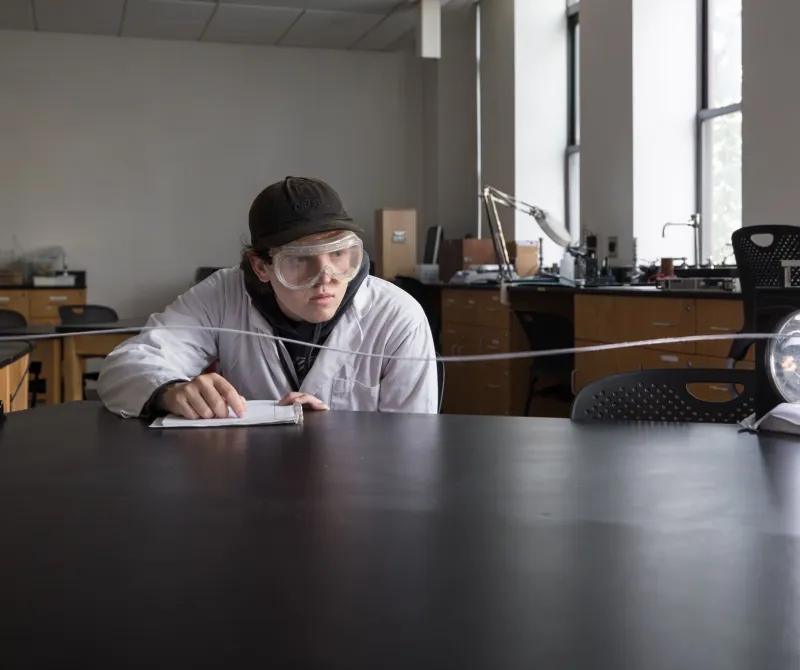
Before the first prototype is ever built, the most successful engineers and scientists use theories and models to predict performance. In the Applied Mathematics, Applied Sciences, and Physics programs, you will learn to run real experiments that test these fundamental theories and model complex systems. By using math and code to simulate real-world conditions, you can identify potential flaws and optimize designs in a virtual environment, saving time and resources during the building process.
This predictive work is essential for any high-stakes project where failure isn't an option. Whether you are calculating the flight path of a satellite or the structural integrity of a new machine, these programs provide the rigorous logical framework needed to turn abstract concepts into predictable, physical reality. This analytical expertise ensures that when you finally do begin construction, you are building on a foundation of proven data and reliable science.