
Katarina Richter-Lunn
Bio
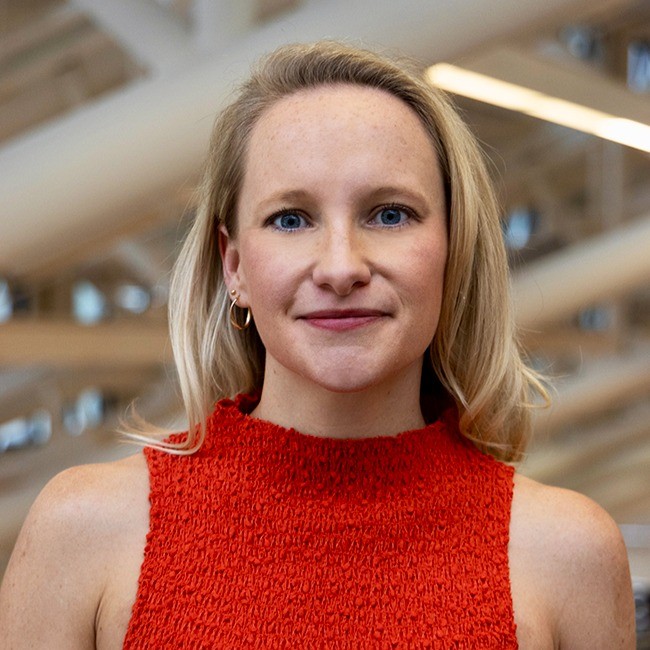
Katarina Richter-Lunn is an architectural designer, creative technologist, and an Assistant Professor at Wentworth Institute of Technology. Her interdisciplinary research, situated at the intersection of design, psychology, and physiology, is dedicated to promoting well-being through the built environment.
Drawing from traditional behavioral therapy, her work explores how interactions between humans, machines, and spaces can be mediated through programmable materials, wearables, and AI algorithms to support mental health in more seamless and intuitive ways. She investigates how neurological and physiological signals offer insight into human behavior, and how materiality, computational design, physical computing, and extended reality can be leveraged to foster well-being by addressing both deliberate cognition and embodied perception.
In addition to her primary appointment, Katarina is currently a Visiting Lecturer in Design Engineering at Harvard University’s School of Engineering and Applied Sciences and in Architecture at the Graduate School of Design. From 2022 to 2025, she served as the TeenArch Summer Program Coordinator and Lecturer at UCLA, and has also taught as a Lecturer in Northeastern University’s Department of Art and Design. During her doctoral studies at Harvard, she worked as a research assistant with the Materials Processes and Systems Group (MaP+S) and was a member of the Aizenberg Lab at the Wyss Institute for Biologically Inspired Engineering.
Katarina holds a Doctor of Design (D.Des.) and a Master in Design Studies (M.Des.) in Architecture, Technology, and Innovation from the Harvard Graduate School of Design, and a Bachelor of Architecture (B.Arch.) from Cal Poly San Luis Obispo, with a minor in Sustainable Environments. She has worked at leading firms including Snøhetta, Arup, IwamottoScott, and most prominently Gehry Partners, where she worked as a project designer. She was also awarded the Paul & Daisy Soros Fellowship for New Americans in 2022 and named a Built Environment Deans Advancing Change (BEDAC) Fellow in 2025.