
Robert Cowherd, Ph.D.
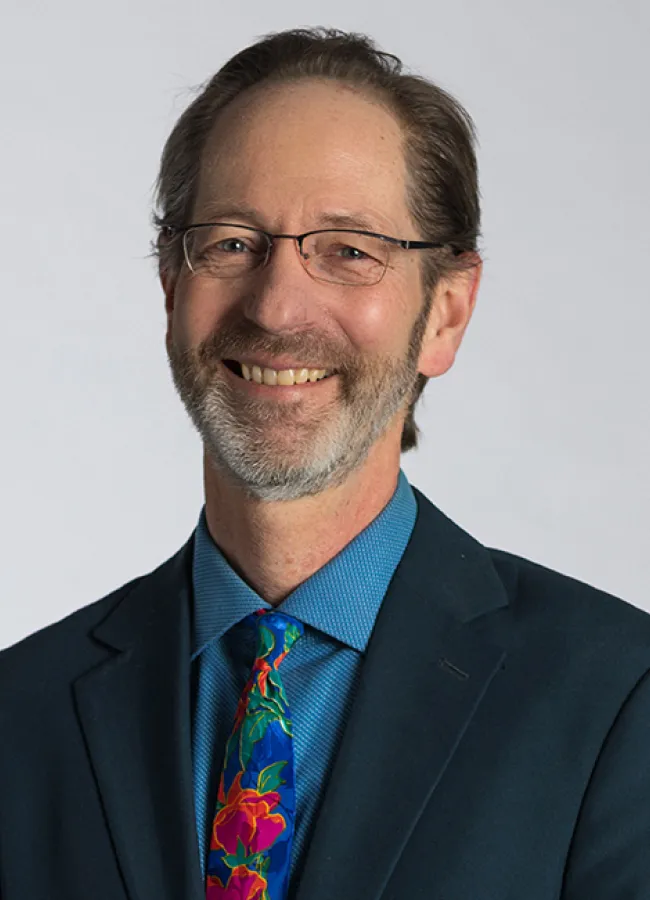
Professor Robert Cowherd joined Wentworth in January 2006. His coursework in the Architecture Program focuses on the history and theory of architecture and cities.
As a two-time Fulbright grantee, Cowherd spent January 2000 to December 2000 conducting research in Jakarta, Indonesia and four months in Medellín, Colombia in 2014. During his time in Indonesia, his research topic, Cultural Construction of Jakarta, explored design of the capital city as an instrument of an aggressive nationalist agenda. Cowherd previously lived for four years in Solo, Java researching the palace city’s urban architecture and the structural role it plays in the Javanese religion and belief system.
His research in Medellín focused on Social Urbanism, a term coined by Colombian architect Alejandro Echeverri, referring to the ways that relatively small architectural and urban interventions can catalyze large scale transformations. According to Cowherd, one of the most rewarding aspects of his Fulbright experience was having unique access to people and sites. In Medellín, for example, he interviewed local community members about their role as “clients” collaborating in the design and development of Medellín’s now famous “Library Parks.” This was an extension of his work with Wentworth professor Manuel Delgado with whom he organized two international “Designing For Life” symposia at Wentworth.
Their first symposium in 2009 brought Echeverri and other central figures responsible for Medellín’s positive transformation, Jorge Pérez and former Mayor Sergio Fajardo, to Boston. The 2014 Fulbright Scholar Grant gave Cowherd the opportunity to dig deeper and make the lessons of Medellín’s transformation a key reference point for his students. “I have the confidence to say things I wouldn’t be able to point out to my students if I hadn’t spent four months in Medellín as a Fulbright scholar,” says Cowherd.
One thing that surprised him was the tremendous benefit of learning new languages. Despite taking high school French and a year-long intensive Italian course during college, it wasn’t until he lived in Indonesia that he became fluent in a second language. Since then, other languages have become easier and he now uses Indonesian, Javanese, Dutch and Spanish in his research and online social life.
Despite these successes, Cowherd is quick to point out that his first three applications to the Fulbright program were rejected. This perspective informs his work advising applicants and serving on Fulbright review boards.
“It’s a lot of work and the rejection can be devastating,” says Cowherd. “Knowing the process helps you take the rejection less personally.”
Cowherd considers the Fulbright Scholar Program a transformative opportunity that has impacted his work in numerous ways. As he puts it, “My curiosity led to explorations, my explorations led to research, and my research led to better teaching, publications, and a PhD.” He also sees his Fulbright experience beyond the conventional career markers.
“I have a different relationship with the world,” says Cowherd. “I feel much more comfortable in the world. I have hope.”